

BY HEATHER MICHON
EDITOR
The cancellation of a Lake Monticello town hall on Tenaska’s proposed second natural gas plant has exposed differing interpretations of Virginia’s open-meeting law and prompted the Fluvanna County Board of Supervisors to consider adding a policy to its bylaws limiting how many members may attend community events together.
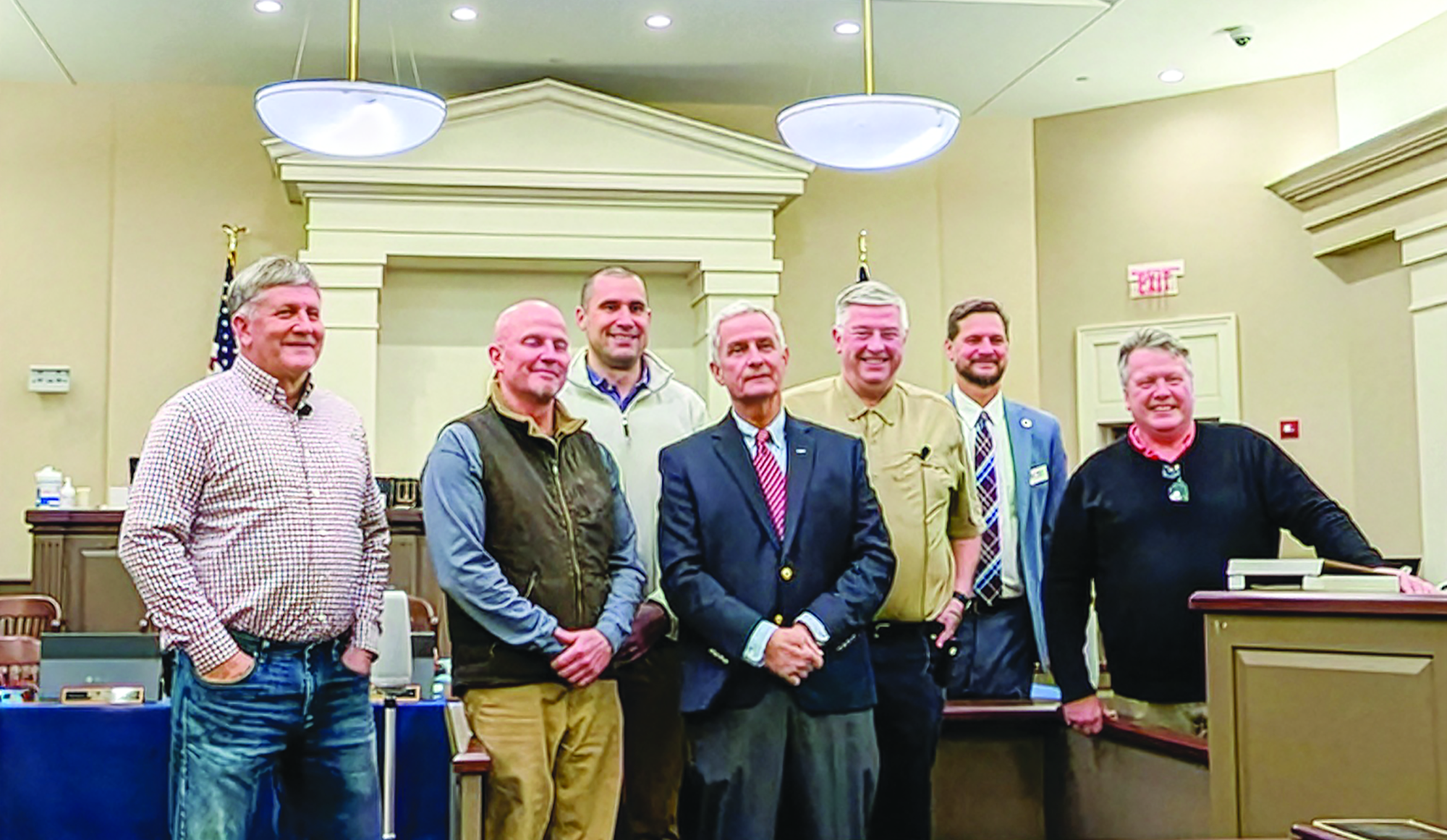
The Lake Monticello Owners Association (LMOA) announced Feb. 10 that it was canceling a Feb. 12 town hall, where residents would have had the opportunity to question supervisors Tony O’Brien (Rivanna) and Tim Hodge (Palmyra), along with Tenaska representatives, about the proposed Expedition Generation project.
The cancellation was prompted by word that a third supervisor, Chris Fairchild of the Cunningham District, was also planning to attend.
“Under Virginia public meeting requirements, this would constitute a special session of the Board of Supervisors, which must be fully open and accessible to the public,” LMOA said in an announcement Tuesday evening.
Fairchild said in a Facebook post Tuesday that he wanted to be there “merely as an audience member,” and wrote that “Fluvanna’s attorney advised that as long as I would not have participated in formal conversations my attendance as a citizen and LMOA member would not have been in violation, and the BOS would not have had to call a special meeting.”
But LMOA Communications Director Marieke Henry said County Attorney Dan Whitten advised the association against holding the meeting if three supervisors were in attendance.
“The bottom line was his advice was not to have it,” Henry said.
Open meeting law at issue
Megan Rhyne, executive director of the Virginia Coalition for Open Government, said the Virginia Freedom of Information Act does not automatically treat the presence of three members of a public body at an event as a meeting.
“FOIA says that it is a meeting if three or more gather to talk about public business,” Rhyne said. “The key is ‘talk about’ more than what is or isn’t ‘public business.’”
She said supervisors may attend forums or community gatherings so long as they do not discuss public business among themselves without proper notice.
“They can all go to the meeting, but they shouldn’t be talking among themselves — even through a facilitator or mediator,” she said. “Better still, they should sit apart from each other to remove the temptation and the perception that they’re talking about public business.”
However, if three or more members plan to discuss public business among themselves, notice must be given, and the meeting must be open to the public.
The differing interpretations hinge on whether the mere presence of three supervisors at a public forum constitutes a meeting under FOIA, or whether a meeting occurs only if they discuss public business among themselves.
Fluvanna County has long taken a stricter interpretation of FOIA.
“Since I have served on the Board, it has been the long-established practice that the presence of three members — regardless of whether one member remains silent — requires the calling of a special meeting,” O’Brien said. “This practice originated under Fred Payne and was reaffirmed by Whitten in 2023.”
In a Feb. 12 statement, the county said Whitten advised that if three or more supervisors attended and public business was discussed, the gathering would qualify as a “meeting” under Virginia Code § 2.2-3701 and would require formal notice as a special meeting open to the public.
The county cited the 2023 Virginia Supreme Court decision in Gloss v. Wheeler. In that case, the court held that a gathering of four Prince William County supervisors to discuss public business constituted a meeting subject to FOIA notice requirements.
After reviewing the county’s statement, Rhyne said the county attorney appeared to be taking a cautious approach.
“It sounds like the county attorney is erring on the side of caution,” she said. “While I think there is a little more wiggle room — that they can attend without calling a special meeting, so long as they don’t talk amongst themselves — the attorney seems to want to remove the temptation for them to even be in a position where they might have that group conversation. As a citizen, I would appreciate that caution.”
Fallout and next steps
O’Brien said he requested that LMOA cancel the meeting after discussions arose about whether a third supervisor’s attendance would trigger FOIA requirements and create potential legal exposure.
He said a last-minute alternative format had been proposed but that, in his view, it still introduced “unnecessary legal risk.” He added that a closed session was scheduled Feb. 11 to further evaluate the issue, making it impractical to proceed on Feb. 12.
“At no point was I under the impression that Tony O’Brien didn’t want to have this meeting,” said Marieke Henry. She said LMOA’s decision to cancel was ultimately based on the county’s legal guidance and practical considerations.
A special meeting open to the public could have strained the association’s security resources and physical capacity. Henry noted that Lake Monticello’s main meeting room holds about 50 people, with limited space for overflow.
At its Feb. 18 meeting, the Board is scheduled to consider codifying new language in its bylaws addressing community engagement.
The proposed policy would allow individual supervisors to hold or participate in town halls and other community gatherings at their discretion, but limit attendance to no more than two board members at any such event.
Because FOIA defines a meeting as a gathering of three or more members to discuss public business, the two-member limit would prevent such events from triggering special meeting requirements in the future.
Depending on the outcome of the Feb. 18 vote, O’Brien said a new town hall may be scheduled in early March.