

BY Page H. Gifford
Correspondent
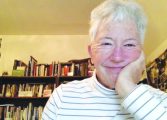
On March 21 from 2–3 p.m., Cynthia Moore will welcome Georgetown University faculty member Lisa J. Williams, PCC, to lead the monthly wellness program at the Lake Monticello Ashlawn Clubhouse Terrace Room.
The free experiential session will introduce the Community Resiliency Model (CRM), a practical approach to building resilience and emotional well-being. Participants will learn about three types of stress, how to identify body sensations, and three skills to help manage stress in daily life.
Williams describes her professional background as that of a “recovering corporate executive.” She spent 26 years in the corporate technology sector before retiring in 2019 to start a consulting practice, TLJN Consulting. The name combines the names of her family members—Tony, Lisa, and daughters Jayde and Niyah—while also standing for To Learn Just Notice.
“I believe that is how we all learn,” she said.
Williams is a professionally certified leadership coach who helps individuals and organizations connect across differences. She also serves as an adjunct faculty member at Georgetown University, where she teaches similar leadership and communication concepts.
Her interest in CRM began during her coach training.
“On that journey, I was introduced to the Community Resiliency Model by a coaching colleague,” she said. “After a three-hour training, I knew this would become part of my wellness practice.”
Within a year, she decided to become certified so she could share the model more widely.
CRM is a trauma-informed, resiliency-focused approach that helps people recognize and regulate their nervous system responses to stress. The method emphasizes the biology of the human nervous system and introduces the concept of the Resilient Zone, a state of emotional and physiological balance where people can manage a range of feelings and respond effectively to challenges.
Williams explains that the training allows participants to see how their bodies respond to different sensations.
“Our teaching is experiential, so each participant can notice what shifts in them and begin to name what is pleasant, unpleasant, or neutral,” she said. “This skill is called tracking.”
Participants also learn grounding, which involves noticing how the body is supported by the environment, and resourcing, which focuses on identifying people, places, or experiences that provide comfort during difficult times.
“The heart of CRM is the resilient zone,” Williams said. “It is the zone of well-being where our nervous system is balanced, and we are not experiencing survival responses such as fight, flight, freeze, fawn, or befriend.”
People can experience many emotions while in that zone, including anger, sadness, or happiness, without losing their ability to function effectively.
“It’s not toxic positivity,” she said. “It’s learning to notice the full human experience while still being our best selves.”
The “community” aspect of the model reflects its accessibility. CRM was developed by co-founder Elaine Miller Karas following work in Thailand after the devastating 2004 Indian Ocean tsunami. The goal was to teach simple, biology-based skills that could be shared widely within communities, helping people support themselves and others during times of crisis.
Because the approach focuses on the nervous system, Williams said it can be taught across cultures and age groups. It does not require participants to talk about trauma.
“This model is somatic-based,” she explained. “It simply invites people to notice sensations in the body—pleasant, unpleasant, or neutral—and gently shift attention if needed.”
Williams believes the tools are especially relevant in today’s environment.
“We live in what is often called a VUCA world—volatile, uncertain, complex, and ambiguous,” she said. “Our nervous systems are designed to protect us, which means many people feel constantly on alert.”
Learning to recognize those signals can help people better navigate stress and reconnect with others.
Williams said the model has also had a personal impact on her life.
“I am a breast cancer survivor, and over the last five years, my health markers have steadily improved,” she said. “More importantly, I have become a more patient mother, wife, teacher, and coach.”
She credits CRM with helping her live more intentionally.
“I notice the stories I make up in my head and shift my attention to something pleasant or neutral,” she said. “I jump in puddles, walk in the rain, play in the snow, and laugh much more.”
The March 21 program is open to the public.
For more information or to reserve a spot, contact Cynthia Moore at cynhygeia145@gmail.com. Drop-ins are also welcome.