
By Heather Michon, Editor
The Fluvanna County Board of Supervisors voted unanimously on Wednesday (April 1) to oppose a proposed high-voltage transmission line that would cut across the county, citing concerns over property values, environmental damage, and the long-term impact on the county’s rural character.
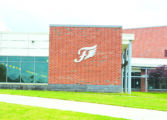
The board’s meeting was held at the Fluvanna County High School auditorium to accommodate a large audience.
The project proposed by Valley Link, the Joshua Falls-to-Yeat transmission line, would span approximately 115 miles from Campbell County to Culpeper County, passing through Fluvanna and eight other localities.
The 765-kilovolt line is one of the highest-capacity transmission systems in the United States and is designed to move large volumes of electricity across the region to meet rapidly increasing demand.
Representatives from Dominion Energy described the project as a necessary response to unprecedented growth in electricity use, driven largely by data centers, population increases, and electrification trends. They warned that without additional infrastructure, existing transmission lines in central and northern Virginia could face overload conditions as early as 2029.
“This is the fastest pace of load growth we’ve seen in decades,” project representatives told the board, noting that demand could double by 2035.
But supervisors made clear they are not persuaded that the benefits outweigh the local costs. The proposed line would require a 200-foot-wide cleared right-of-way and towers up to 160 feet tall. No existing transmission corridors in Fluvanna align with the project’s path, meaning the line would cut through previously undisturbed areas and private property.
County officials said the project could affect between 76 and 120 parcels in Fluvanna alone, with potential impacts on property values ranging widely depending on proximity and land use. Supervisors also raised concerns about noise, visual impacts, and potential health effects.
“I’m absolutely in opposition,” said Supervisor Chris Fairchild (Cunningham), pointing to the cumulative effects on residents and the county’s landscape.
The board’s resolution formally urges both Valley Link and the Virginia State Corporation Commission to seek alternatives that would avoid what it described as “irreparable damage” to the county’s natural beauty and quality of life.
Despite local opposition, ultimate authority over the project rests with the state.
“I do wish we had more of a formal say in the matter,” said Supervisor Mike Goad (Fork Union).
The State Corporation Commission will evaluate the proposal through a formal regulatory process expected to begin later this year, with a decision likely in 2027. If approved, the line could be operational by 2029.
Project representatives said they are still refining potential routes and gathering public feedback, with additional community meetings planned for June. They emphasized that current maps are not final.
County Administrator Eric Dahl said that several of the counties affected by the Valley Link plan intend to meet to coordinate their actions as the project moves through the planning process.
The Valley Link project is part of a larger effort to strengthen the electric grid across the Mid-Atlantic, allowing power generated in the Ohio River Valley to be transmitted east to areas of high demand, including Northern Virginia.
“Something that was said earlier was that they’re interested in maintaining the electric grid integrity,” said Amy Williams, one of dozens of residents to speak. “I’m interested in maintaining the integrity of Fluvanna County.”